News & Analysis
February 11, 2026
With home insurance premiums soaring in the aftermath of wildfires in Maui and Los Angeles, state leaders in Hawaiʻi and California have introduced legislation aimed at making Big Oil pay its fair share of the costs of extreme weather disasters — instead of passing those costs on to the public through higher insurance rates.
Like a similar effort in New York, the bills give state attorneys general additional tools to take large oil and gas corporations to court to recover damages from climate-driven weather disasters. Big Oil knew their products would cause potentially “catastrophic” changes to weather patterns, but spent decades trying to mislead the public about the problem. These events are making home insurance more expensive and leading insurers to drop people from their policies altogether.
Funds recovered through successful lawsuits against Big Oil would be used to:
Home insurance continues to get more expensive and harder to obtain in California in the aftermath of last year’s deadly Los Angeles fires. A shocking 1 in 5 Californian homeowners now report going without home insurance, risking financial ruin after the next major disaster.
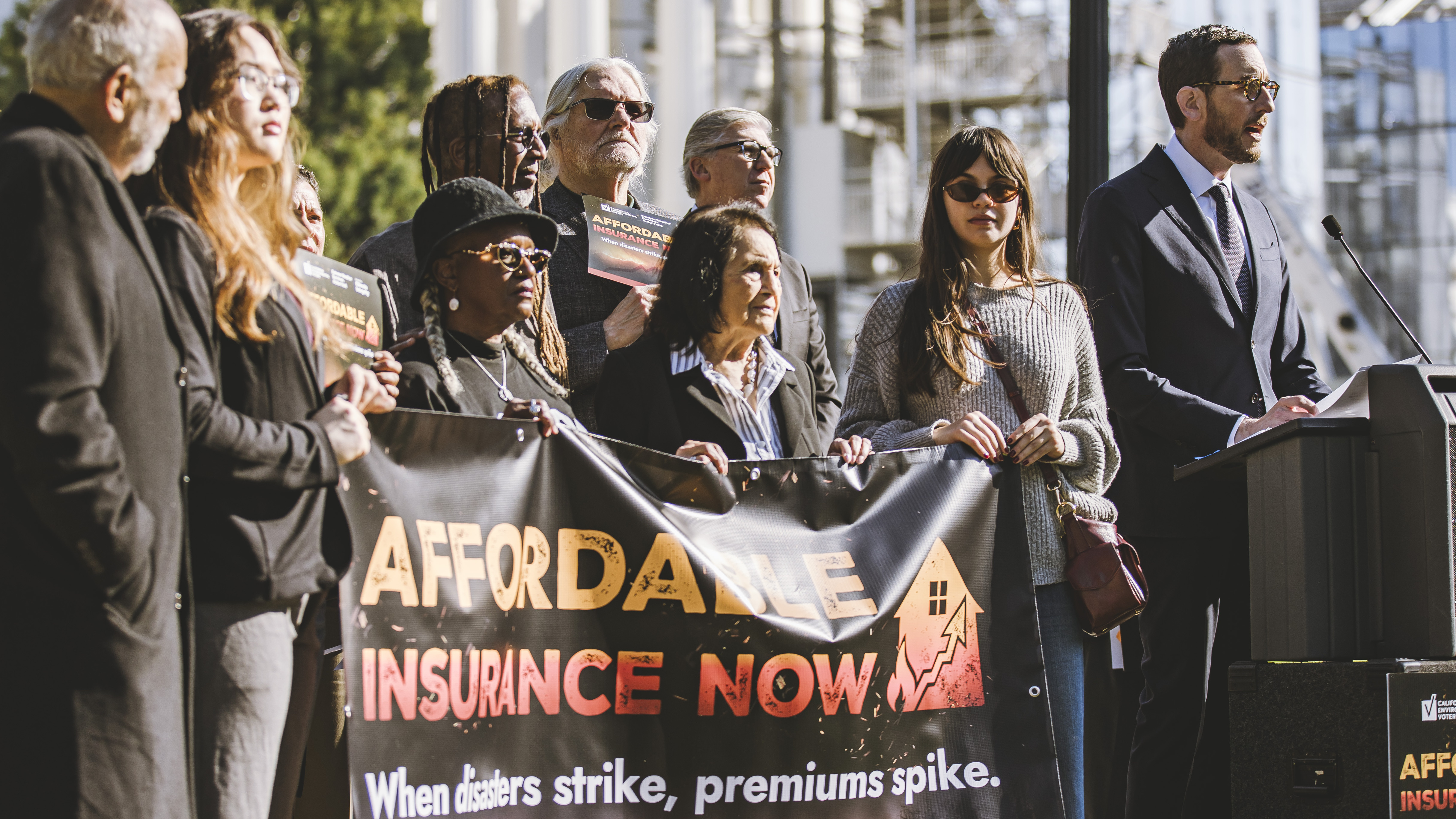
At a Thursday press conference, state Sen. Scott Wiener joined survivors of recent weather disasters and labor legend Delores Huerta to introduce SB 982, the Affordable Insurance & Recovery Act.
“We know years ahead are going to be dramatically more dangerous when it comes to climate disasters,” Wiener said. “We can’t allow Californians — our residents and our small business — to be left holding the bag. [The Affordable Insurance & Recovery Act] will allow us to shift the costs of the climate crisis off the back of Californians and onto the fossil fuel companies that recklessly pushed us to this unbelievably unsustainable place.”
The Affordable Insurance & Recovery Act (Senate Bill 982) would help stabilize Californiaʻs insurer of last resort (FAIR Plan) program. The FAIR Plan has seen enrollment surge more than 300% since 2021 as insurers drop more and more Californians, citing billions of dollars in losses and rising extreme weather risks. The program nearly went bankrupt after the LA Fires, requiring an emergency billion dollar bailout. Californians stuck on the plan are now facing a 35% rate hike.
“This is Californiaʻs insurance crisis” said Marisa Aguayo, a survivor of historic 2024 flooding in San Diego. “Families face cancelled policies, rising premiums and displacement while the biggest corporations keep profiting. The Affordable Insurance and Recovery Act changes that by holding oil companies accountable and using those funds to protect families and help communities rebuild. Our legislators have a choice - real support for Californians or more empty sandbags.”
Home insurance premiums are through the roof in Hawaiʻi — rising as much as 50% in the past year, as insurance companies pass on their losses from the drought-aided Maui wildfires to policyholders statewide.
Senate Bill 3000 would give the state's attorney general new legal tools to keep home insurance affordable and available by holding Big Oil financially accountable for climate change's contribution to extreme weather disasters. The bill comes as the state was hit with a damaging winter storm this week that closed schools and businesses amid 70 mile per hour wind gusts and as much as 30 inches of rain.
Bill sponsor state Sen. Jarrett Keohokalole recently said it’s unfair that the public is being asked to cover all of the growing costs of extreme weather disasters through higher home insurance and rent.
“Without a doubt, the increasing incidence of really devastating natural disaster events is what’s driving the insurance crisis,” Keohokalole recently told the Guardian. “Whose fault is that? We know.”
Hawaiʻi taxpayers have a lot on the line, as the state’s Hurricane Relief Fund is now functioning as the financial backstop for condominium insurance in the state after condo insurers began drastically raising rates and leaving the state last year.
Just last week, the Director of the Department of Commerce and Consumer Affairs warned in a report that insurers are now considering Hawai'i high risk for wildfire after the 2024 Maui fires and that the state lacks a long-term funding source for its Hurricane Relief Fund, which could be exhausted by a major disaster. SB 3000 would provide another revenue source for this vital safety net, paid for by the Big Oil companies that are uniquely responsible for climate chaos.
With Hawai'i and California joining New York, three states are now trying to make Big Oil pay their fair share of the cost of climate disasters that are causing the home insurance crisis and driving the countryʻs affordability challenges.