News & Analysis
July 30, 2026
The U.S. Supreme Court should reject Big Oil’s meritless arguments to stop the City and County of Boulder, Colorado, from putting ExxonMobil and Suncor Energy on trial for deceiving the public about the dangers of fossil fuels, the local governments said in a filing this week, as the high court prepares to hear arguments this fall.
Boulder is seeking to make Exxon and Suncor pay for local climate damages — including wildfires, droughts, and extreme heat — that the companies fueled by “concealing and/or misrepresenting the dangers associated with fossil fuels’ intended use.” The two oil majors are asking the Court to overturn last year’s Colorado Supreme Court ruling that allowed the case to advance to discovery. But the companies “have come to the wrong forum at the wrong time with the wrong arguments,” Boulder explained in briefs filed this week, and the justices should therefore allow the City and County’s case to proceed in Colorado state court.
Here are some major takeaways from Boulder’s arguments:
First, Exxon and Suncor are being “impatient” by asking the Supreme Court to review the case before there has been a final judgment in the Colorado state courts and before the justices have jurisdiction to hear the case. “This Court may only review state courts’ final judgments, not interlocutory rulings like this one,” Boulder wrote. Until there is a final judgment, any argument that a decision in the case “will someday injure petitioners is entirely speculative.” Legal observers have noted that some justices likely agree that it is too early for them to hear Boulder’s case, because the justices themselves added the question of whether they have “jurisdiction to hear this case” to the arguments for the fall. As Boulder pointed out, Big Oil companies in their impatience are asking the Supreme Court to prematurely intervene in Boulder’s case while simultaneously lobbying Congress to pass bills that aim to give fossil fuel companies immunity from cases like Boulder’s.
Second, Exxon and Suncor’s multiple arguments that Boulder’s claims are preempted by federal law and shouldn’t be allowed to proceed in state court “lack merit.” Big Oil’s defense against climate deception lawsuits like Boulder’s largely relies on mischaracterizing the cases as attempts to regulate greenhouse gas emissions, the power for which resides with the federal government, instead of what they really are: efforts to hold corporations accountable for their deceptive conduct and the resulting harm. In Boulder, Exxon and Suncor’s federal preemption arguments were rejected both by the Colorado trial court, which ruled that "the Energy Companies are arguing against a case the Local Governments did not plead,” and the Colorado Supreme Court, which affirmed that opinion. As Boulder reiterated in its brief this week, “This litigation is not an attempt to solve climate change; it merely asks that petitioners bear their fair share of local costs incurred in part because of their tortious conduct.” Boulder further explained that “avoiding liability would not require reducing emissions at all—only telling the truth, so the public can make informed consumption decisions free of the distorting effect of [Exxon and Suncor’s] misrepresentations.”
But in their desperation to escape accountability, Exxon and Suncor are urging the U.S. Supreme Court to revisit their federal preemption arguments that have failed in Colorado courts — as well as consider some new ones. As Boulder’s reply lays out, the case is not preempted by federal law governing greenhouse gas emissions because Boulder’s “claims require only that [Exxon and Suncor] stop misleading the public; they could avoid liability without reducing their contributions to emissions at all.” Exxon and Suncor “identify no constitutional text that preempts [Boulder’s] claims.” And the Clean Air Act, which Exxon and Suncor claim preempts Boulder’s case, “certainly does not charge the EPA with regulating deceptive marketing of fossil fuels,” and “[e]ven if [Boulder’s] claims might indirectly reduce demand for fossil fuels, that is no basis for preemption—taxes on coal extraction and gasoline sales do the same. The Act governs emissions, not conduct in upstream markets.”
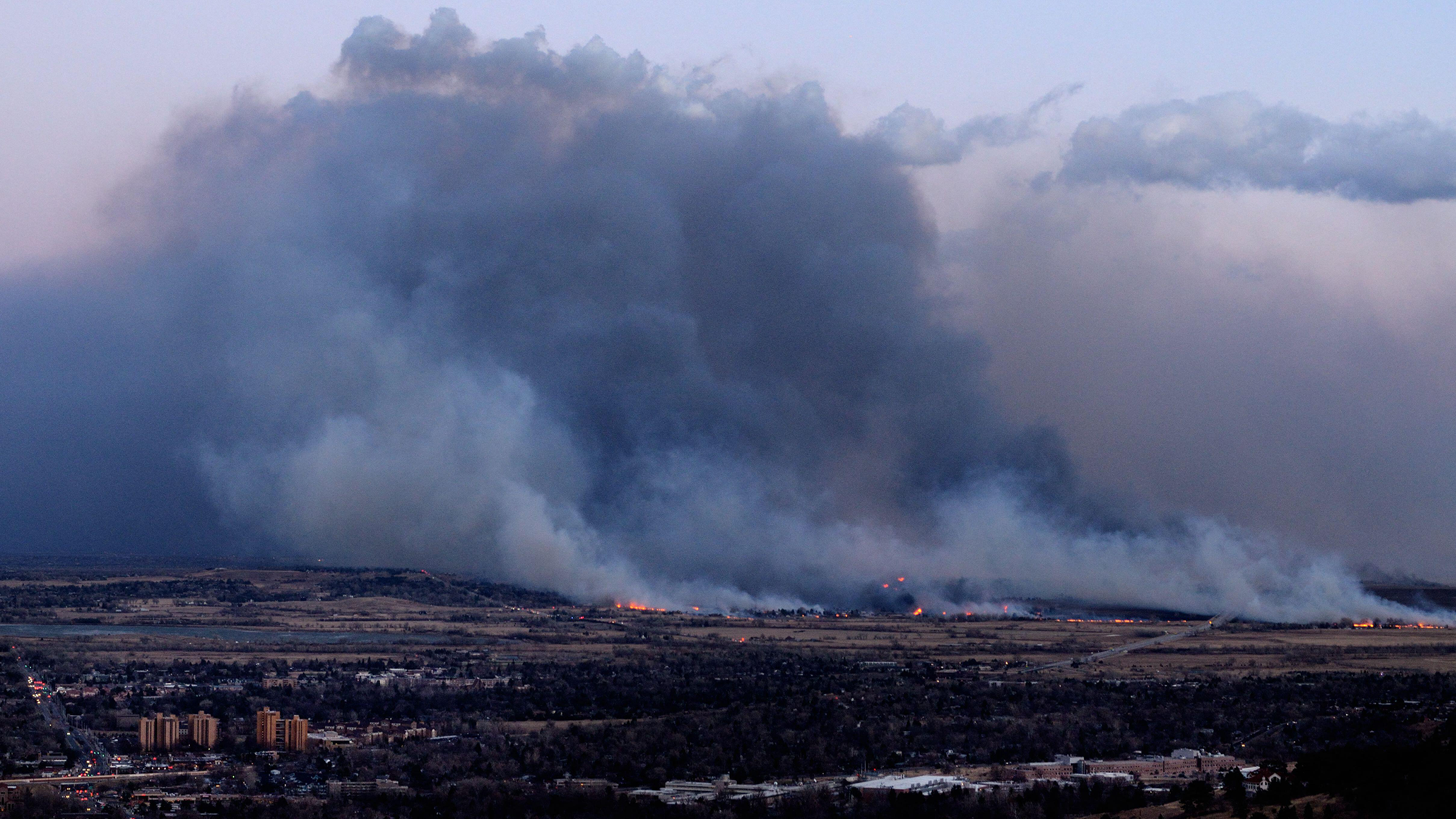
Like other communities across the country, Boulder is facing staggering costs to protect residents and infrastructure from climate damages. In 2021, more than 1,100 homes in the county were destroyed in the deadly Marshall Fire, which scientists found was made more destructive because of climate change. A recent report estimated that climate change could cost Colorado communities up to $37 billion by 2050.
“Alone, [the City and County of Boulder] and their taxpayers cannot pay the full costs of all that is needed to attempt to mitigate the harm caused by climate change, nor should they,” Boulder’s lawsuit argues. “The costs should be shared by Exxon and the Suncor Defendants because they knowingly caused and contributed to the alteration of the climate by producing, promoting, refining, marketing and selling fossil fuels at levels that have caused and continue to cause climate change, while concealing and/or misrepresenting the dangers associated with fossil fuels’ intended use.”
Even if the U.S. Supreme Court believes Boulder will not ultimately prevail at trial, that does not establish a basis for ruling that the case is preempted and should end at this stage, Boulder pointed out: “The Constitution does not preempt hard cases for being hard.”
Image Credit: Ron Rovtar/Alamy